Golden Milk, Explained: Turmeric for Everyday Inflammation
The honest, evidence-first guide to turmeric — what it actually does for inflammation, how to brew golden milk so your body can use it, and who should be cautious.
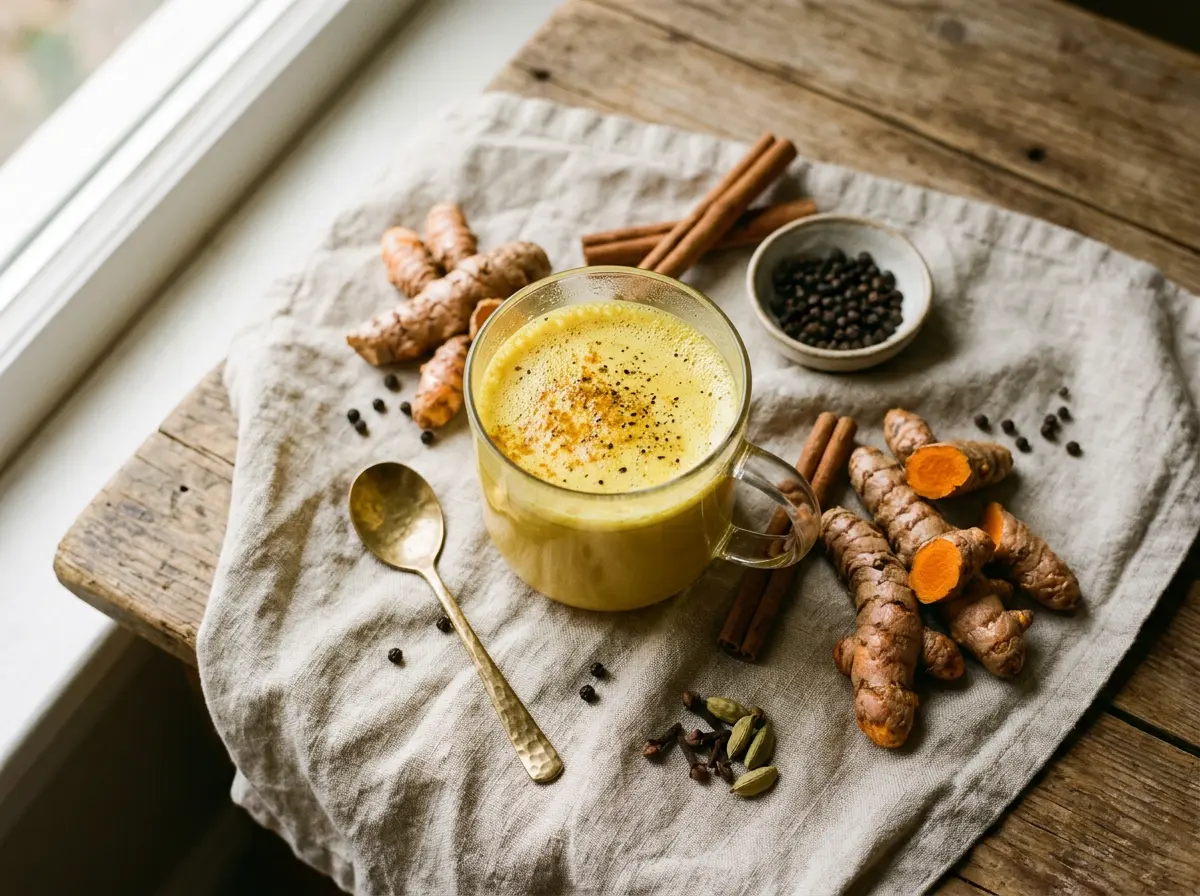
Part 1 of 3 · The science
What turmeric actually does
Turmeric (Curcuma longa) is the golden spice at the heart of Indian kitchens and Ayurvedic medicine. Almost all of its reputation rests on one compound — curcumin. That matters more than most labels admit: ground turmeric is only about 2–9% curcumin, so the spice in your cabinet is a gentle daily dose, not a concentrated medicine (Harvard Health).
Why it calms inflammation
Most modern aches — stiff joints, slow recovery, that general "run-down" feeling — are tied to chronic, low-grade inflammation. In study after study, curcumin acts like a dimmer switch on the body's inflammatory signalling, quieting messengers such as NF-κB, TNF-α and IL-6 and lowering the blood marker CRP (systematic review, Frontiers in Nutrition; clinical-trials review).
What the evidence shows
- Strongest human evidence
- Osteoarthritis joint pain
- Also studied
- Metabolic & heart markers
- Acts on
- Inflammation + oxidative stress
- Status
- A food, not a drug
What it won't do
Turmeric is supportive, not curative. The most consistent human results are for osteoarthritis pain, where curcumin has eased symptoms in real trials — but it is a companion to good sleep, movement and diet, not a replacement for treatment (Harvard Health).
The honest version
The research is genuinely promising, but many turmeric trials are small and short. The smart way to read it: treat turmeric as a pleasant daily habit that supports your body — and judge it over weeks, not days.